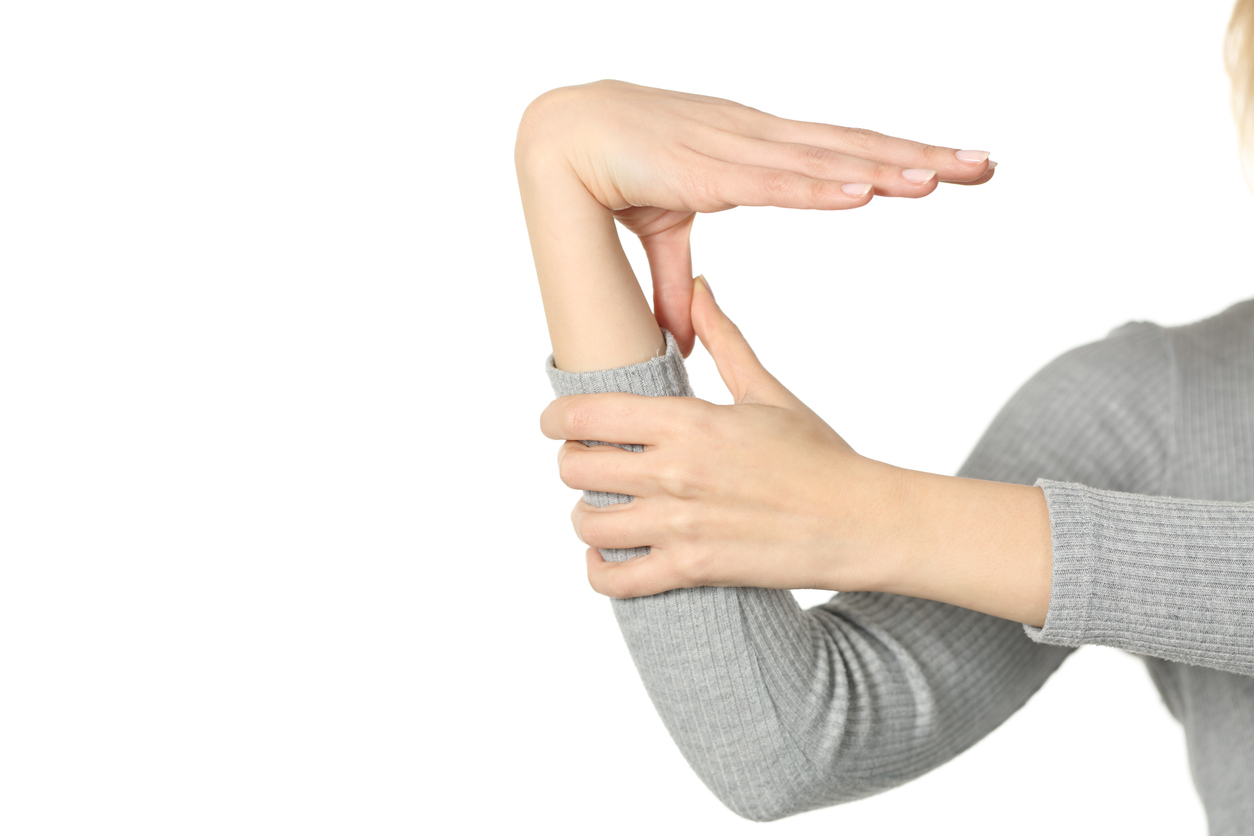
Hypermobility, Could Mold be The Cause?
How Mold Exposure Can Contribute to Hypermobility and Joint Laxity
Hypermobility is often described as something you’re born with—a genetic connective tissue condition like Ehlers-Danlos syndrome. But in clinical practice, we’re seeing a growing number of people who develop new or worsening joint laxity later in life, without a childhood history of hypermobility.
One often-overlooked contributor is chronic mold exposure.
Mold doesn’t just affect the lungs or sinuses. In susceptible individuals, it can disrupt the biochemistry of cartilage, ligaments, and connective tissue, leading to joint instability, excessive mobility, and joints that simply don’t feel as solid as they used to.
Mold Triggers Chronic Inflammation That Breaks Down Cartilage
Mold and mycotoxins activate the immune system, particularly innate inflammatory pathways. This leads to elevated inflammatory cytokines such as:
TNF-α
IL-1β
IL-6

These signals stimulate matrix metalloproteinases (MMPs)—enzymes designed to remodel tissue.
When MMP activity stays chronically elevated, they begin to degrade:
Collagen fibers
Proteoglycans
The cartilage matrix that provides strength and shock absorption
Over time, cartilage becomes softer and less resilient, allowing joints to move beyond their normal, supported range.
Mold Weakens Collagen—the Scaffolding That Stabilizes Joints
Ligaments and tendons rely on tightly organized collagen fibers to keep joints stable. Mold exposure can interfere with this system by:
Reducing collagen production
Increasing oxidative damage to collagen fibers
Disrupting collagen cross-linking, which gives connective tissue its strength
The result is stretchier, weaker connective tissue, even in people without a genetic connective tissue disorder. Joints may feel loose, unstable, or prone to injury rather than strong and supported.

Mycotoxins Impair the Body’s Ability to Repair Connective Tissue
Cartilage is uniquely vulnerable tissue. It has no direct blood supply and depends on efficient cellular energy to maintain and repair itself.
Mycotoxins disrupt mitochondrial function, reducing energy availability inside cartilage cells. When this happens:
Repair slows
Matrix renewal declines
Small injuries accumulate instead of healing
Over time, this loss of repair capacity contributes to joint laxity and instability—but importantly, this process can be interrupted and supported.
Mold Can Promote Immune Cross-Reactivity With Joint Tissue
In some individuals, mold antigens resemble components of human connective tissue, a process known as molecular mimicry.
This can trigger immune responses that cross-react with:
Type II collagen
Aggrecan
Joint synovium
Rather than causing acute arthritis, this often creates a slow, low-grade inflammatory process that weakens joint tissue over time—quietly, but progressively.
Neurologic Effects of Mold Affect Joint Stability
Joint stability isn’t just structural—it’s also neurologic.
Mold-related neuroinflammation can interfere with:
Proprioception (the brain’s awareness of joint position)
Muscle coordination and timing
Protective stabilization reflexes
When muscles don’t engage quickly and accurately, joints move into unsafe ranges more easily. The good news is that neurologic control can improve as inflammation resolves and targeted rehabilitation is introduced.
The Encouraging Truth: This Is Often Fixable
Here’s the hopeful part: mold-related hypermobility is frequently reversible or improvable.
When mold exposure is identified and addressed—through environmental testing, removal from exposure, detoxification support, inflammation control, and structural rehabilitation—many people experience:
Stronger, more stable joints
Less pain and inflammation
Improved coordination and balance
A return to activities they had avoided
While long-standing or genetic hypermobility may not fully disappear, acquired laxity can often heal as connective tissue regains strength and the nervous system relearns stability.

A Hopeful Takeaway
If you’ve noticed your joints becoming looser, more unstable, or injury-prone—especially later in life—this isn’t something you have to simply accept.
We look for why your joints changed in the first place. Mold exposure is one of the most common and most treatable contributors we see.
With the right testing, guidance, and support, your body has a remarkable ability to restore strength, stability, and confidence in movement.
Healing is possible—and it often starts with asking the right question.